East Peoria Nutrient Feasibility Study and Optimization Plan
Services
Markets
Client
City of East Peoria
Scale
5.4 MGD
Location
East Peoria, IL
Year
2020
Share


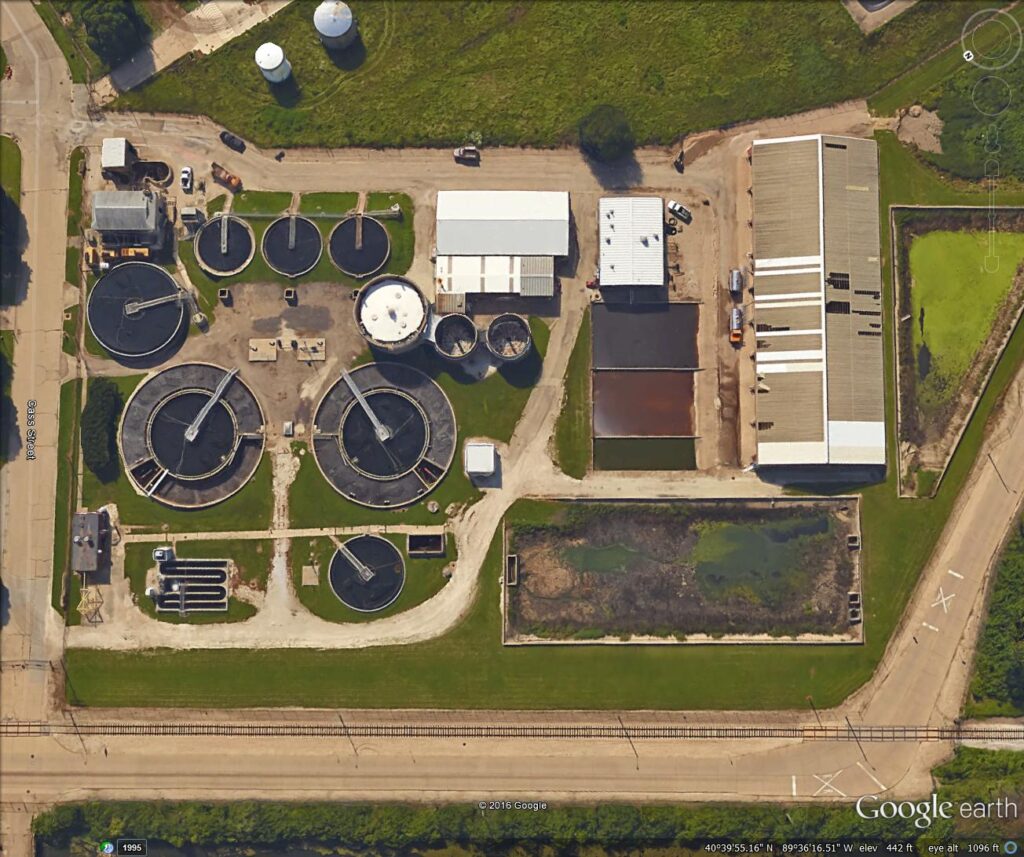
The City of East Peoria hired Farnsworth Group to create a Phosphorus Feasibility Study and Optimization Plan. The plan was undertaken to meet the requirements set forth in the City’s NPDES permit for both WWTP #1 and WWTP #3. WWTP #1 has not had a major upgrade since the early 1990s, and most of the equipment dates from that time period. WWTP #3 has not had a major upgrade since the plant was built in the 1970s, and the equipment dates from then as well. Therefore, in conjunction with the improvements necessary for nutrient removal, additional plant upgrades were also incorporated.
The existing WWTP #1 has screening, vortex grit, primary clarification, activated sludge, secondary clarification, gas chlorine disinfection, and anaerobic sludge digestion. The existing WWTP #3 has screening, two activated sludge package plants with aerobic digestion and secondary clarifiers, and gas chlorination disinfection.
The City collected influent samples for a variety of sample criteria at WWTP #1. The sample results were used as inputs into a GPS-X process model. The model evaluated many alternatives to determine the best course of action for how to best achieve nutrient removal biologically. The improvements selected for plant design related to nutrients are: elimination of three primary clarifiers, the reconfiguration of the existing aeration basins, the addition of a new aeration basin, the addition of two secondary clarifiers, the addition of a two-stage fermenter, and the reconfiguration of an existing secondary digester for chemical treatment of the dewatering underdrain flow.
There are also additional improvements to be made to the plant that are more “age of equipment related” than nutrient related, including: replacement of all of the sewage pumps and most of the sludge pumps, replacement of the aeration blowers with high-efficiency units, digester improvements, vortex grit improvements, bar screen replacement, stormwater storage improvements, replacement of the dewatering equipment, and assorted electrical and SCADA improvements. Where at all possible, existing infrastructure will be reused. The existing WWTP #1 is confined to its existing land footprint.
WWTP #3 is a smaller facility, which is underutilized, but it is located where growth in the community is planned. Biological nutrient improvements are intended to occur when the plant is to be expanded for capacity reasons at a future phase. The more immediate concern is adding a pump station to correct the plant hydraulics, upgrading the screening, replacing the blowers, refurbishing the stormflow pond, and adding sludge dewatering at the plant. Phosphorus removal will be via chemical means until the plant upgrade occurs.
The aeration basin improvements include the reconfiguring of the basins into three separate treatment trains with anaerobic/anoxic selector zones and aeration zones. All of the basins will include supplemental mixing in addition to aeration. The aeration system will be controlled via ammonia/nitrate probes for low DO operation. Due to space constraints, primary clarification will be reduced to one existing clarifier with a high flow bypass. The existing clarifiers will be turned into aerobic digesters for the WAS. The primary sludge will be sent to the existing anaerobic digester. The sludge will not be combined, and it will be pressed separately to eliminate the majority of the phosphorus from returning to the front end of the plant.