Judge Webber Park Interceptor Sewer Repair
Services
Markets
Client
Urbana-Champaign Sanitary District
Location
Urbana, IL
Year
2019
Share


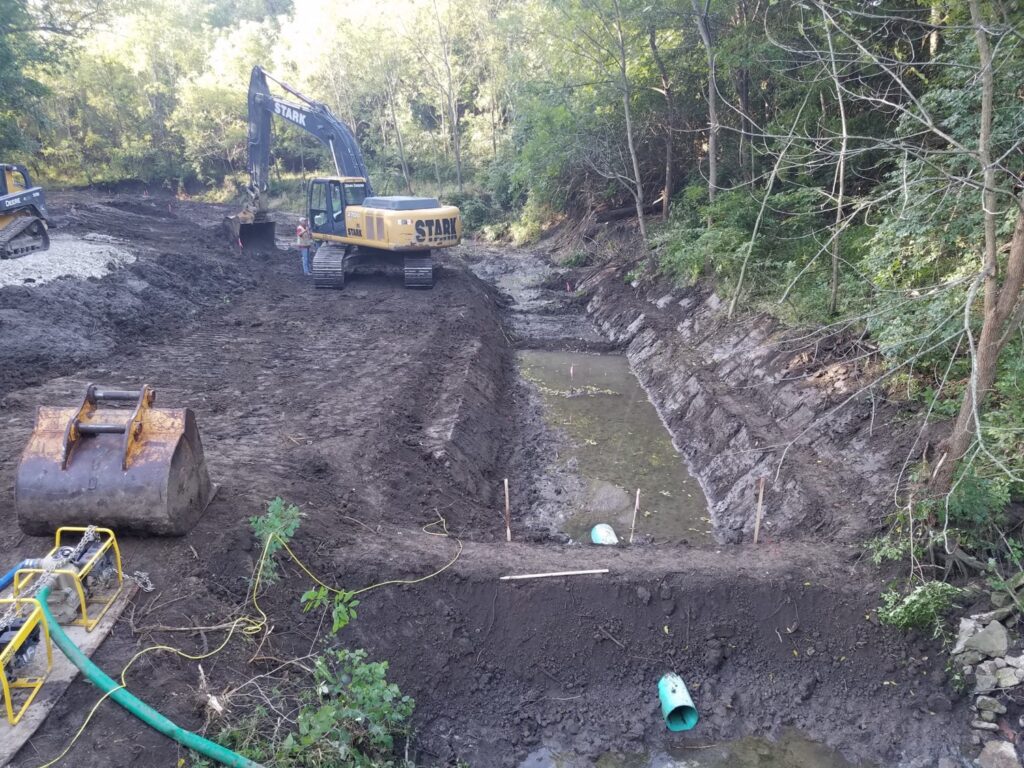
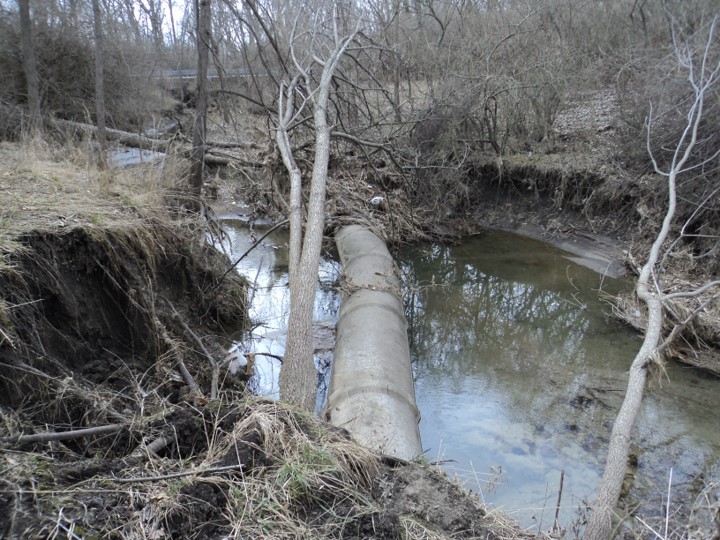
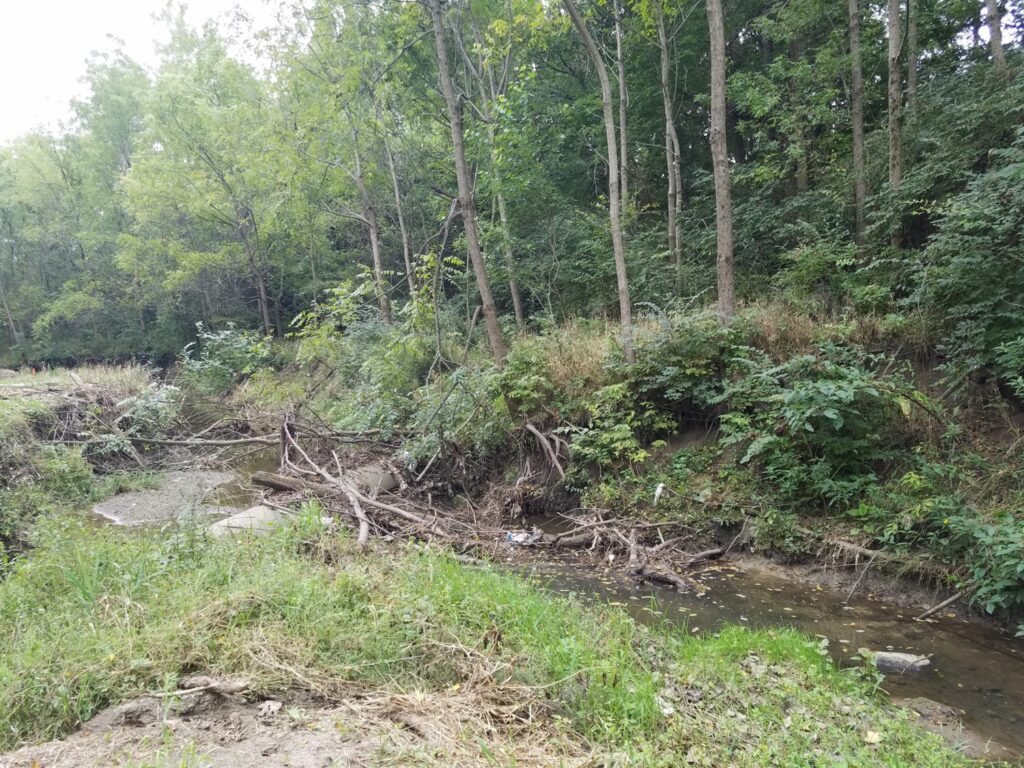
Channel downcutting, lateral migration, and bank mass-wasting of a stream in Judge Webber Park contributed to exposing a 33” sanitary interceptor and threatening a manhole on the west bank. Farnsworth Group was hired by the Urbana-Champaign Sanitary District (UCSD) to assess the situation, develop schematic design alternatives, and design a permanent solution to the situation. Five schematic design alternatives were analyzed for cost, feasibility, and permit requirements.
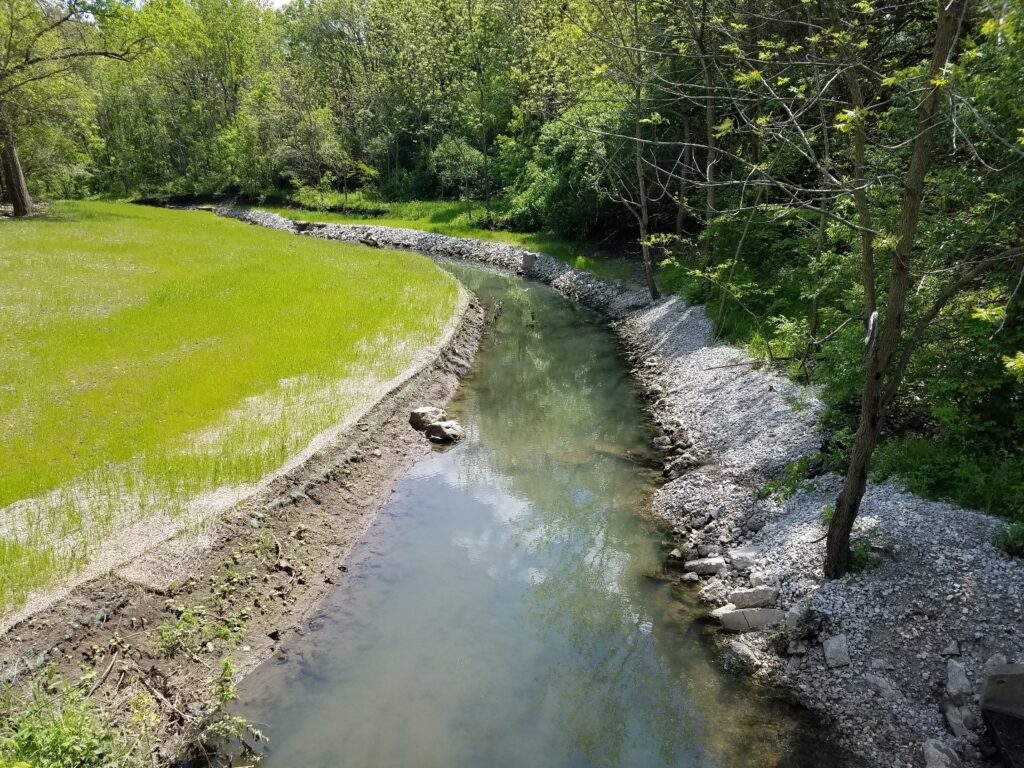
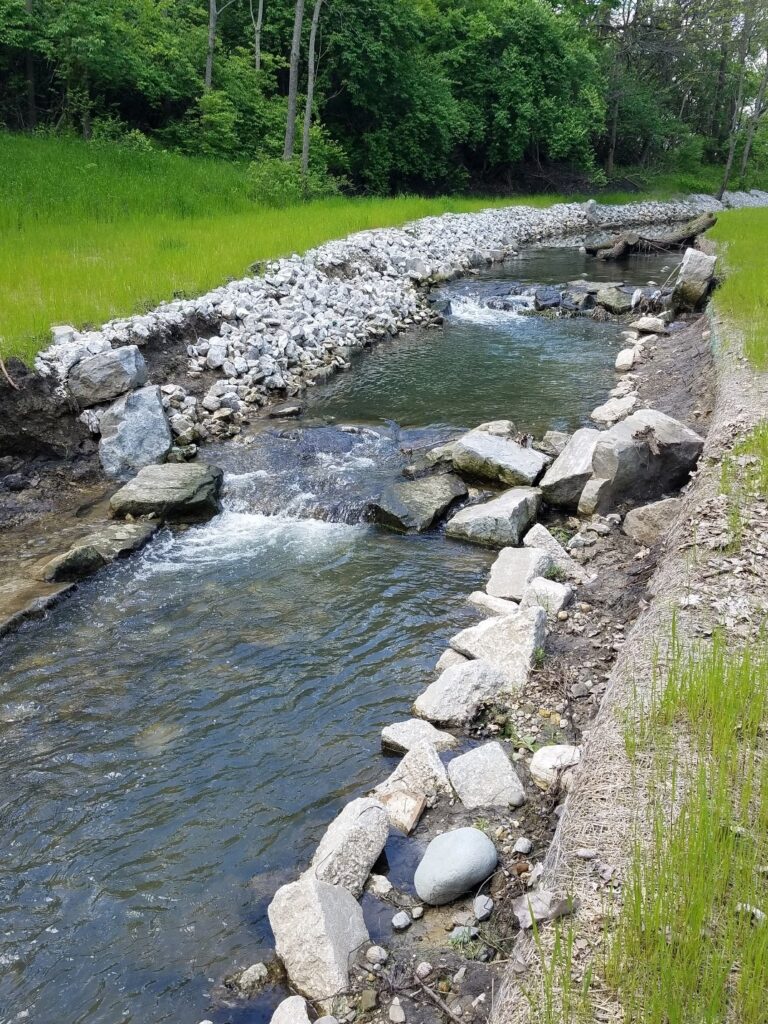
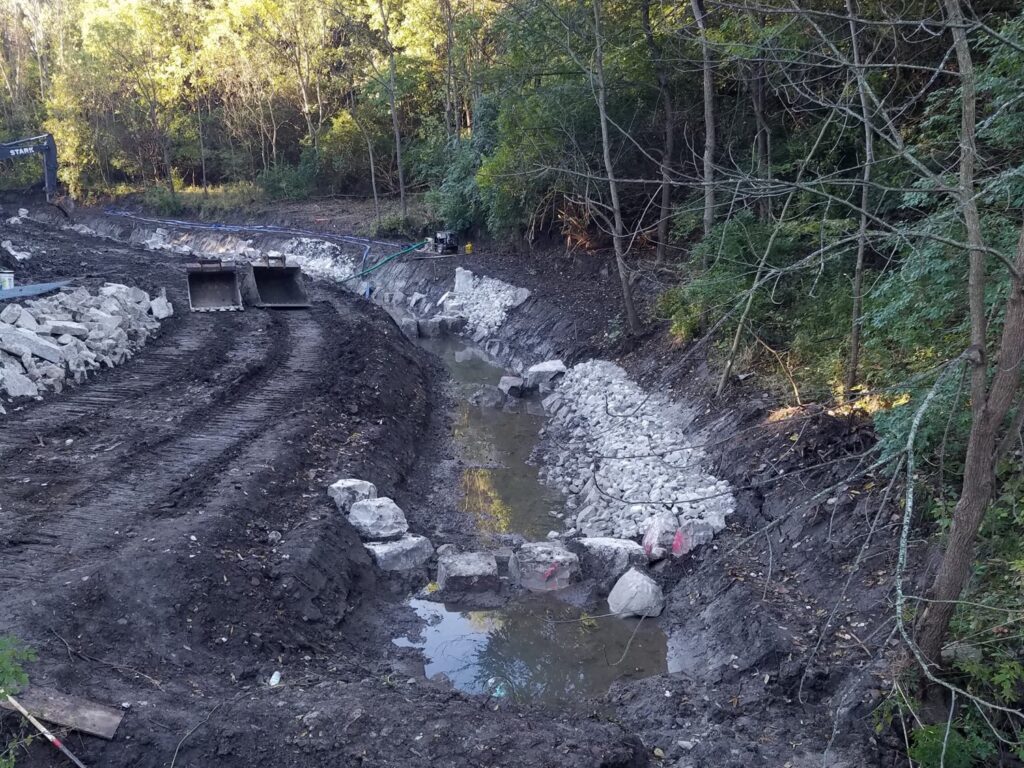
The design incorporated reshaping the channel cross-section geometry, providing a bankfull bench for floodwaters, and adjusting the alignment of the stream so the pipe/stream crossing was close to a right angle. The elevation of the top of the sanitary pipe was higher than the proposed bottom of the stream channel, so the pipe was armored with gabion baskets surrounding the sides of the pipe and Reno mattresses filled with riprap on top of the pipe. The pipe crossing slowed and pooled water upstream of the crossing, and the crossing acted as the beginning of a stream riffle as water flowed quickly over the crossing and cascaded down the steep slope of the channel.
To further protect the pipe and improve the stability of the channel, two Cross-Vane Weir structures constructed from large boulders in series directly downstream of the pipe were constructed. Each weir included a large scour pool behind it to safely dissipate energy until water reached a flatter, more typical stream slope for the Tributary. A Cross-Vane Weir at the beginning of the reach and another at the end of the restored reach held the project in place and protected against downcutting. A J-Hook structure constructed from boulders was placed upstream of the manhole to direct flows away from the bank containing the manhole and into the center of the stream.
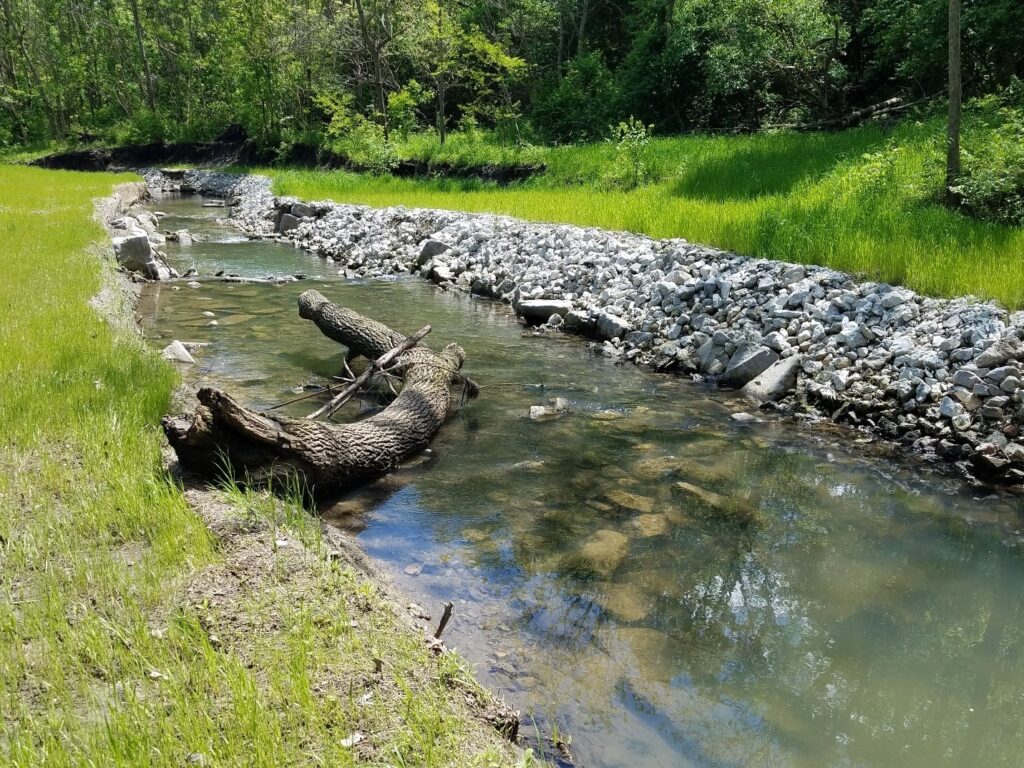
The western streambank was lined with riprap, and a toe boulder was placed along the entire toe of the channel to help hold the bank in place. Native vegetation seeding was placed over the entire disturbed area to restore the habitat and aid in stabilization.
Overall, the project permanently protected the interceptor pipe by stabilizing the stream channel around it. In addition to protecting the sanitary pipe, the project provided long-term stability to the stream, which protected adjacent infrastructure, created ecological habitat in the pools, riffles, and stream structures within the channel, and improved stream water quality by preventing bank erosion.