
King Park is a vital neighborhood park with deep historical significance, serving a predominantly African American community in northern Urbana. Named in honor of Dr. Martin Luther King Jr., the park provides essential recreational and gathering space for local residents.
The Urbana Park District (UPD) partnered with Farnsworth Group to create a new vision that modernizes park amenities while honoring its cultural legacy. Through extensive public engagement, the team worked closely with the community to shape the park’s future.
The resulting master plan features a new “Peace Plaza” along Lincoln Avenue, highlighting the Byways to Equality sculpture by renowned artist Preston Jackson. Additional improvements include a new playground, upgraded basketball courts, a teen hangout space, a pavilion that doubles as an amphitheater, improved sidewalks, raingardens and native plantings for rainwater management, and unique signage celebrating Urbana’s role in the civil rights movement.
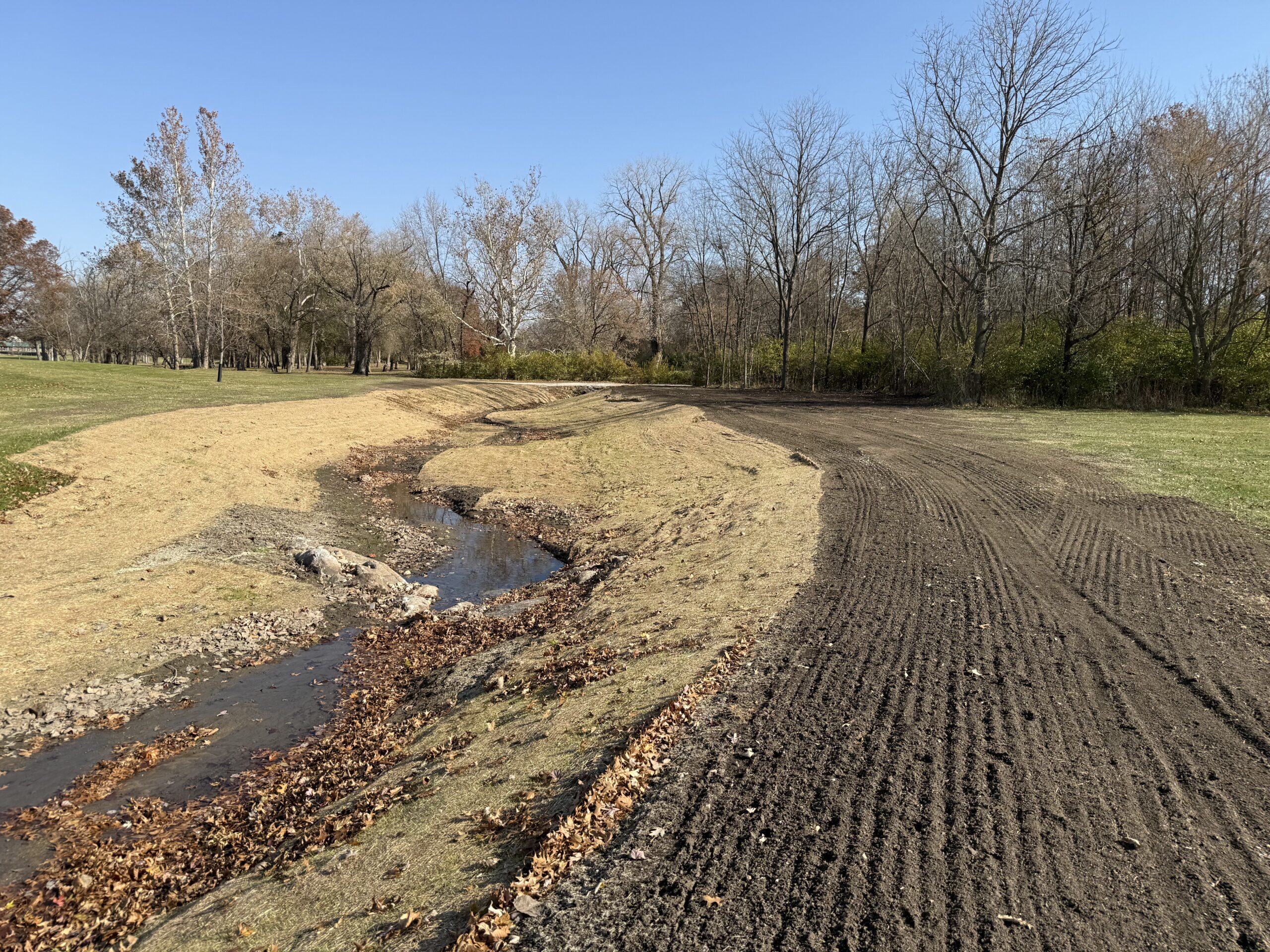
The Turtle Run Golf Course was experiencing severe erosion along the banks of a stream that flows through the middle of a golf course. Farnsworth Group studied the hydrology and hydraulics of the stream and provided a design to stabilize the stream.
The design includes stabilization structures comprised of large boulders to slow the water down and direct it away from critical banks. Significant grading of the existing banks was performed to increase the size of the floodplain and provide the water with space to spread out and dissipate erosive energy.
The stream banks were planted with long-rooted native sedges to hold the soil in place and provide an aesthetic look that fits with the rest of the golf course. The new stream design provides ample space for the water to travel downstream without eroding, protects the banks from erosion, and enhances the overall appearance of the stream and golf course.
Construction was timed to occur in the least busy season of the golf course in order to disrupt play as little as possible. The stream is maintained by the City of Danville through a drainage easement, so coordination with both the City and golf course was imperative to meet the functionality the City required and the aesthetics the golf club desired.
The stream is maintained by the City of Danville through a drainage easement, so coordination with both the City and the golf course was imperative to meet the functionality the City required and the aesthetics the golf club desired.
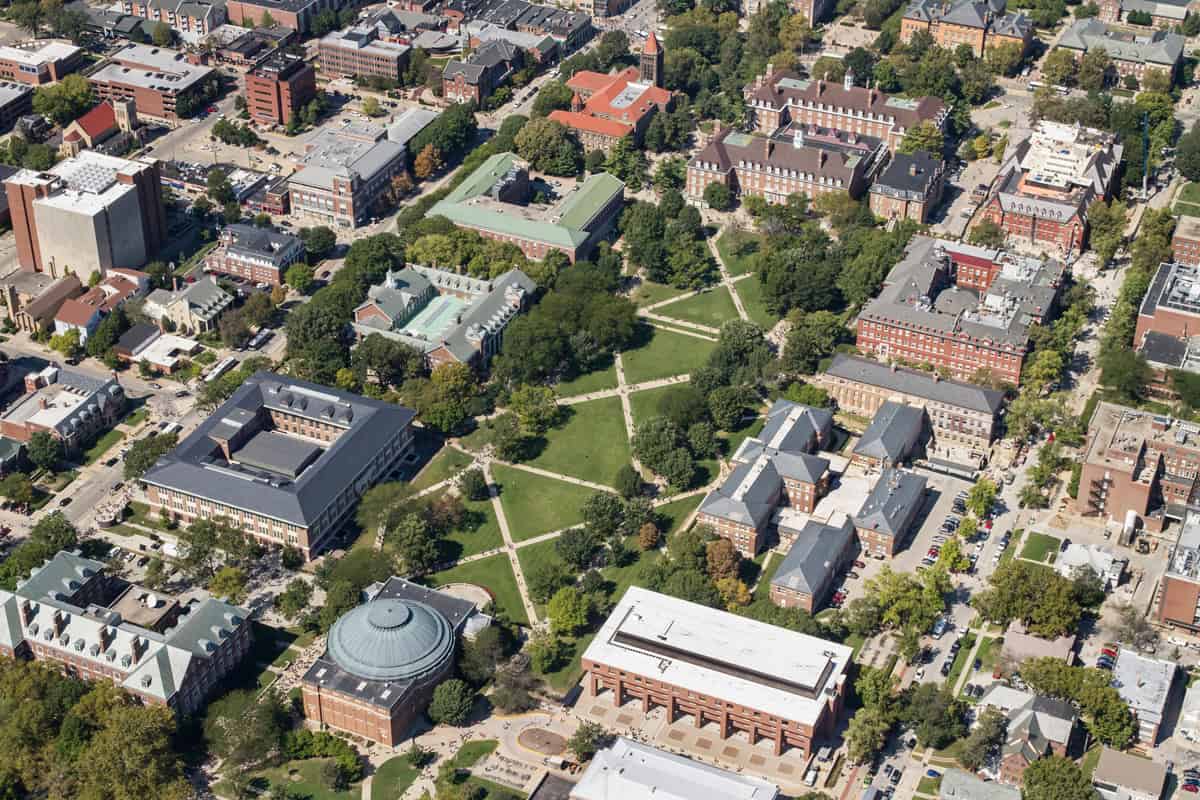
Farnsworth Group developed a Rainwater Management Program for the University of Illinois Urbana-Champaign. The Program addresses current rainwater deficiencies, protect the existing system, provides options for mitigating and resolving known problem areas, and creates recommendations for future rainwater management system improvements.
The recommended improvements have a direct focus on rainwater reuse and green infrastructure technologies, both as part of planned future construction projects and as stand-alone rainwater management projects.
The Program is intended to help the University transition into the emerging paradigm that focuses on retaining rainwater as an asset rather than a nuisance. Specific initiative associated with this project include:
- Retrofit areas from traditional stormwater to green infrastructure design
- Recommend areas for green infrastructure projects
- Provide rainwater roadmap for as new development occurs
- Recommend aesthetic, artful rainwater and ecologically-rich rainwater management solutions
- Redefine stormwater as rainwater
- Recommend funding options
- Recommend marketing strategies
The Rainwater Management Program is the recipient of both the 2026 ACEC Special Achievement Award and the 2026 ACEC Judges Choice Award.
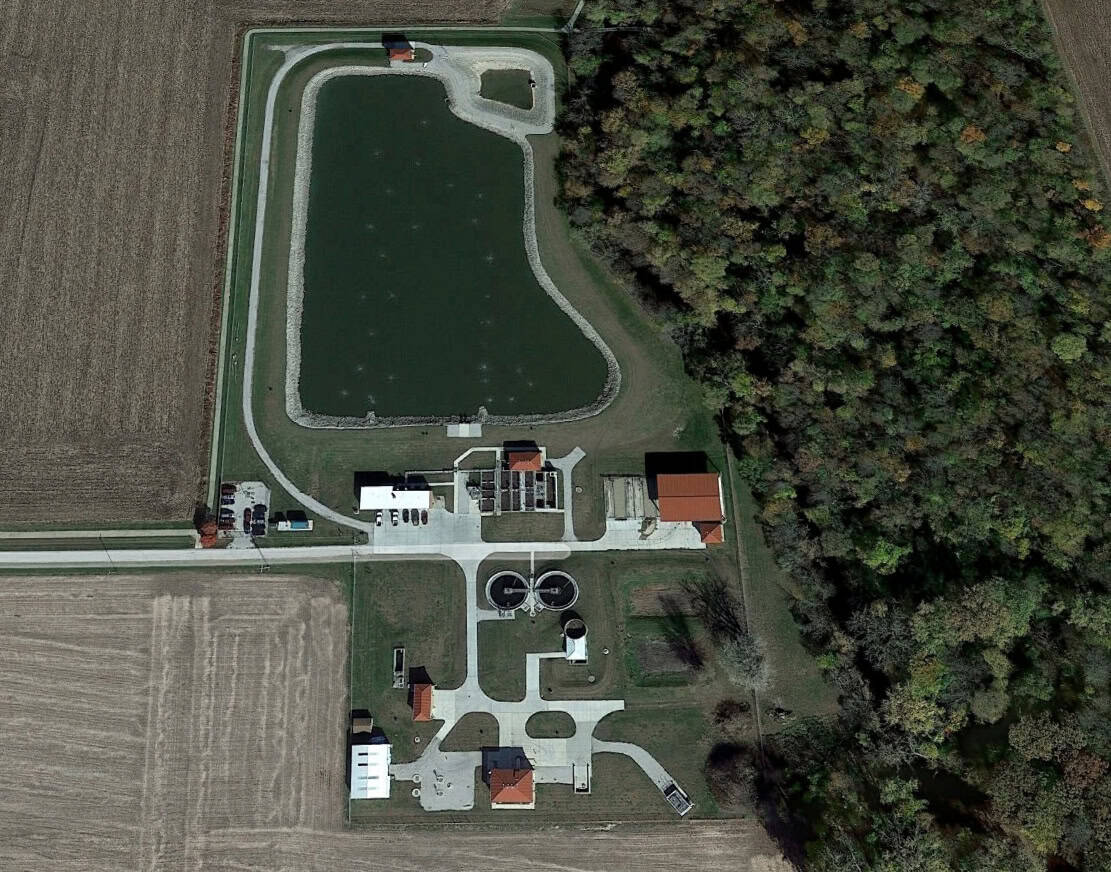
Farnsworth Group is providing wastewater design solutions for both the wastewater treatment plant and the CSO collection system as part of the City of Fairbury’s CSO Long-Term Control Plan.
The plant had not undergone significant upgrades since 1977 and required extensive improvements to achieve compliance with NPDES permit limits. The facility is rated for an average daily flow of 0.66 MGD and a maximum daily flow of 2.4 MGD.
Key improvements include:
- Collection System and Headworks Enhancements: New CSO overflow structure, headworks building, influent pump station, grit removal facilities, and rehabilitation of the 10 MG CSO lagoon.
- Process Treatment Upgrades: Rehabilitation and expansion of aeration facilities, conversion of existing clarifiers to aeration basins, construction of two new secondary clarifiers, and installation of UV disinfection systems.
- Solids Handling Improvements: Sludge building rehabilitation, addition of a fourth digester, new dewatering facility with screw press equipment, and covered sludge storage.
- Electrical, Controls, and SCADA Modernization: New backup power generation, switchgear, motor control centers, fiber communications network, plant-wide controls, SCADA integration, and remote monitoring capabilities.
- Site Infrastructure Improvements: New process piping, electrical duct banks, grading, and pavement upgrades throughout the facility.
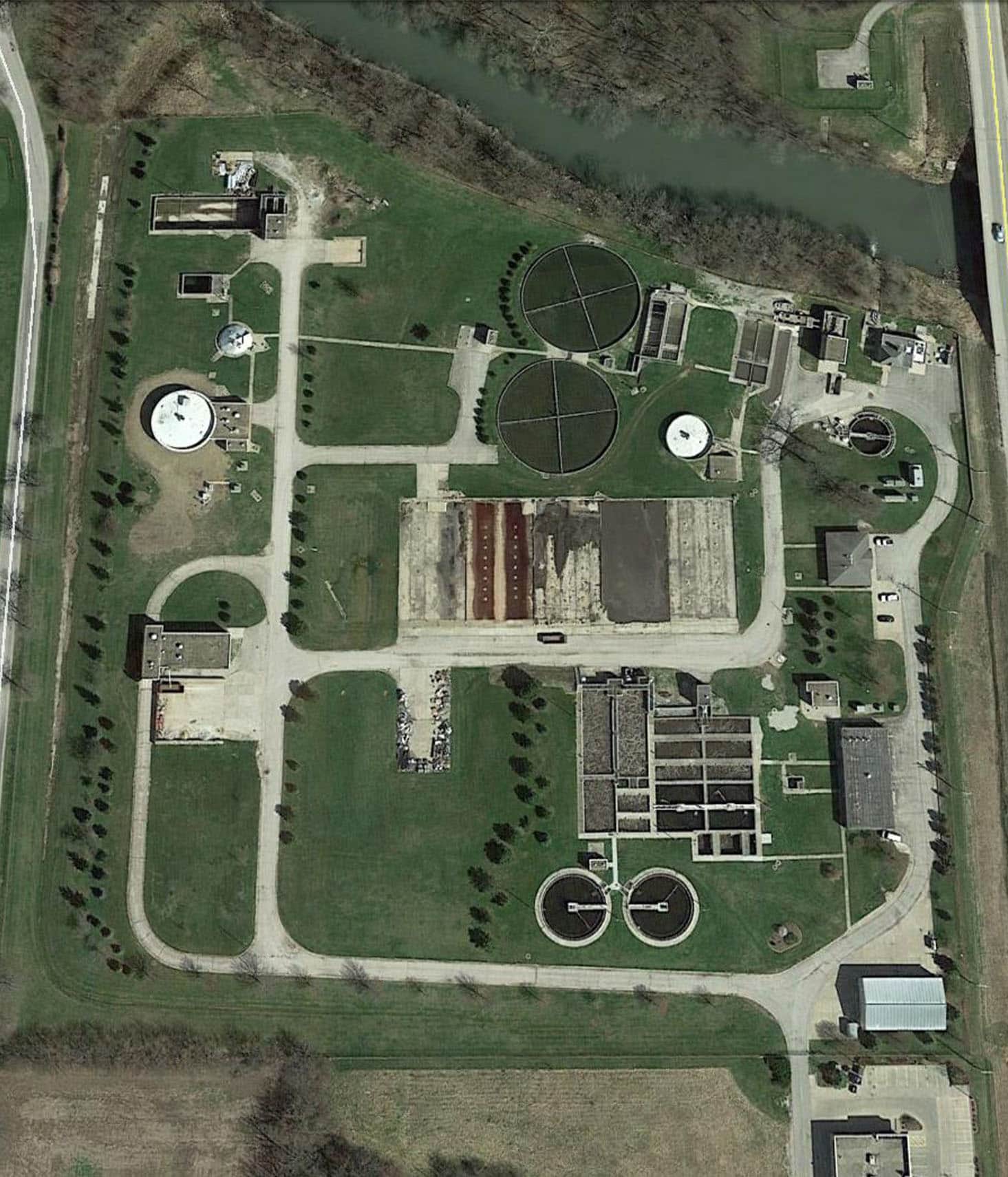
The City of Pontiac, IL, needed to comply with new phosphorus discharge limits while addressing aging wastewater treatment infrastructure that had seen limited upgrades since the 1980s.
Farnsworth Group completed a phosphorus removal feasibility study and optimization plan using GPS-X process modeling to evaluate biological nutrient removal alternatives. Recommended improvements included reconfiguration of existing aeration basins with anaerobic and anoxic treatment zones, conversion of underutilized facilities for tertiary filtration and fermentation processes, a new secondary clarifier, lift station capacity expansions, force main improvements, and plant-wide electrical and SCADA upgrades.
The improvements provide a cost-effective path to nutrient compliance while increasing treatment reliability, operational efficiency, and capacity for future growth.
The City advanced the recommended improvements into design and construction, including biological treatment enhancements, pump and blower replacements, solids handling upgrades, lift station expansions, and system-wide controls modernization.
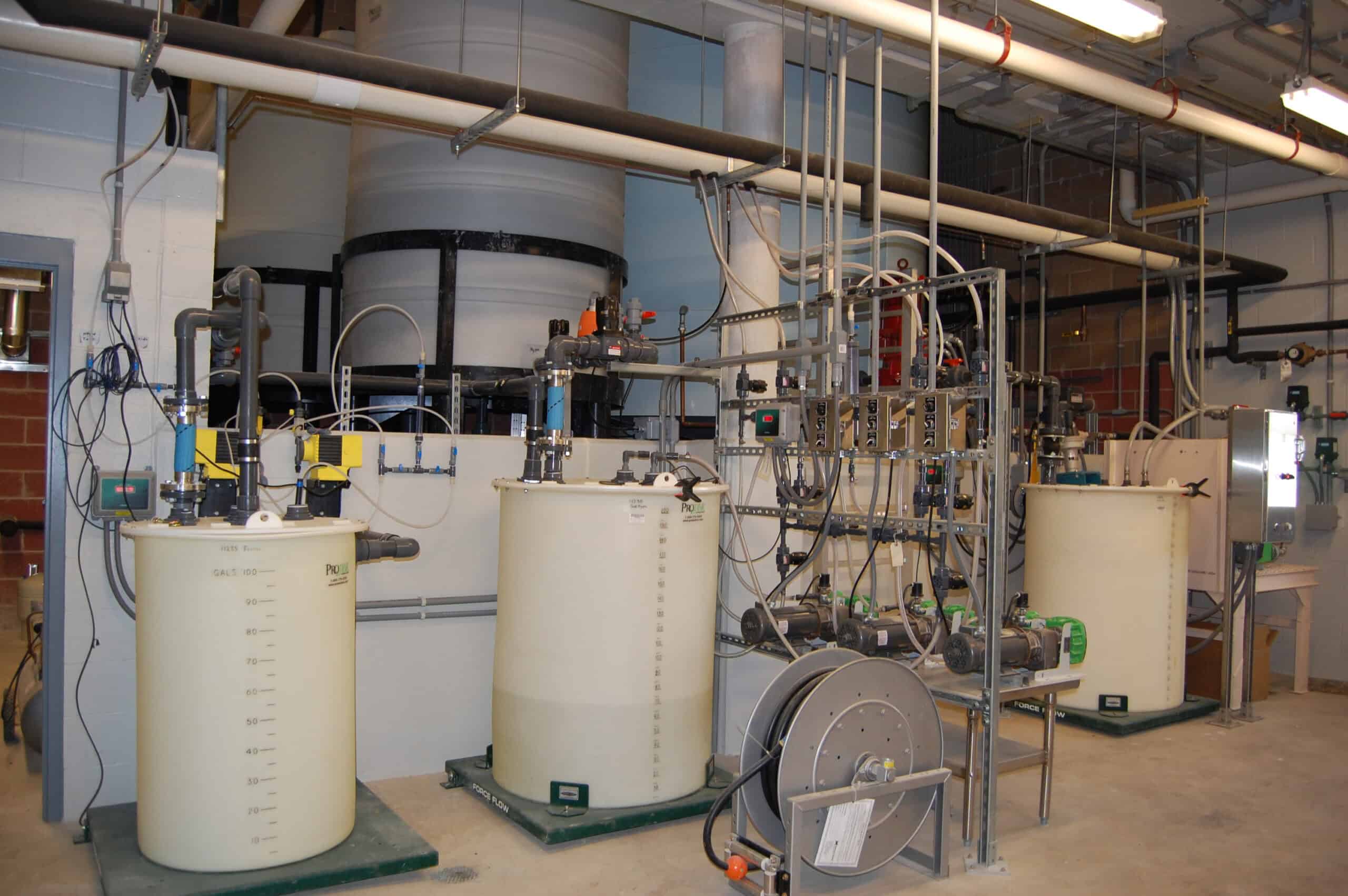
Rapid population growth in the Germantown Hills area was projected to nearly double water demand over the next 20 years, pushing the Caterpillar Trail Public Water District’s existing treatment and distribution system to its capacity limits. The District also wanted to improve water quality through softening and eliminate process wastewater discharges associated with the existing facility.
Farnsworth Group teamed with Bowen Engineering to plan, finance, design, permit, and oversee construction of a new 2.3 MGD lime softening water treatment plant, an additional 800 gpm groundwater well, a 400,000-gallon storage reservoir, and distribution system improvements. The new facility incorporates aeration, solids contact softening, recarbonation, rapid sand filtration, finished water storage, and lime sludge dewatering lagoons. Automated controls, telemetry, and emergency backup power support efficient operation, while new 12- to 16-inch transmission mains improve system reliability and expand service to developing areas.
The project increased treatment, storage, and distribution capacity while providing softened drinking water, eliminating process wastewater discharges, and creating a scalable system capable of supporting long-term growth.
The new infrastructure modernized the District’s water supply system with enhanced treatment processes, expanded groundwater production, increased finished water storage, and transmission improvements designed to meet future demand while maintaining operational efficiency and reliability.
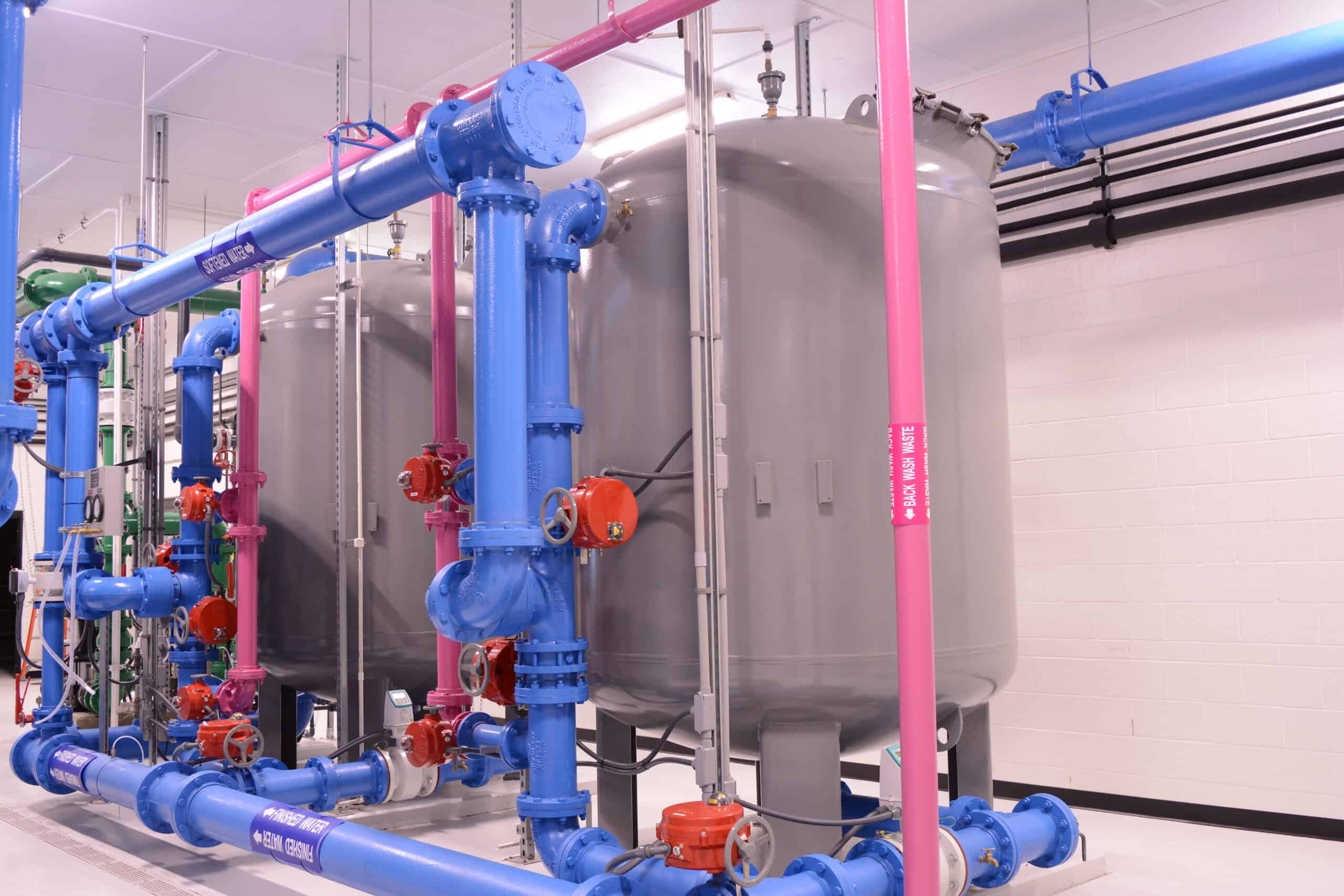
The Village of Roanoke’s existing water treatment plant was located within the Panther Creek floodplain and suffered flooding during a major storm event, while aging infrastructure and equipment dating back to the late 1970s required significant rehabilitation.
Farnsworth Group completed a comprehensive planning study evaluating rehabilitation and replacement alternatives before designing, permitting, and administering construction of a new 500 gpm water treatment plant. The new facility includes aeration and detention, vertical pressure filtration, ion exchange softening, high-service pumping, and chemical feed systems for fluoride, phosphate, brine, and gas chlorine. To address elevated total organic carbon (TOC) levels, the plant incorporates dual anion exchange treatment units that reduce organic compounds, improve taste and odor, and minimize regulated disinfection byproduct formation. Automated controls, SCADA, and an emergency generator with automatic transfer switch support reliable operation with minimal staffing.
The new plant enhances drinking water quality, reduces operational and regulatory risks, improves system resiliency during flood and power outage events, and provides a modern treatment process capable of meeting current and future water quality standards.
The completed facility replaced vulnerable, aging infrastructure with a modern treatment system featuring filtration, softening, organic carbon removal, process automation, and backup power, providing the Village with a reliable long-term water supply solution.
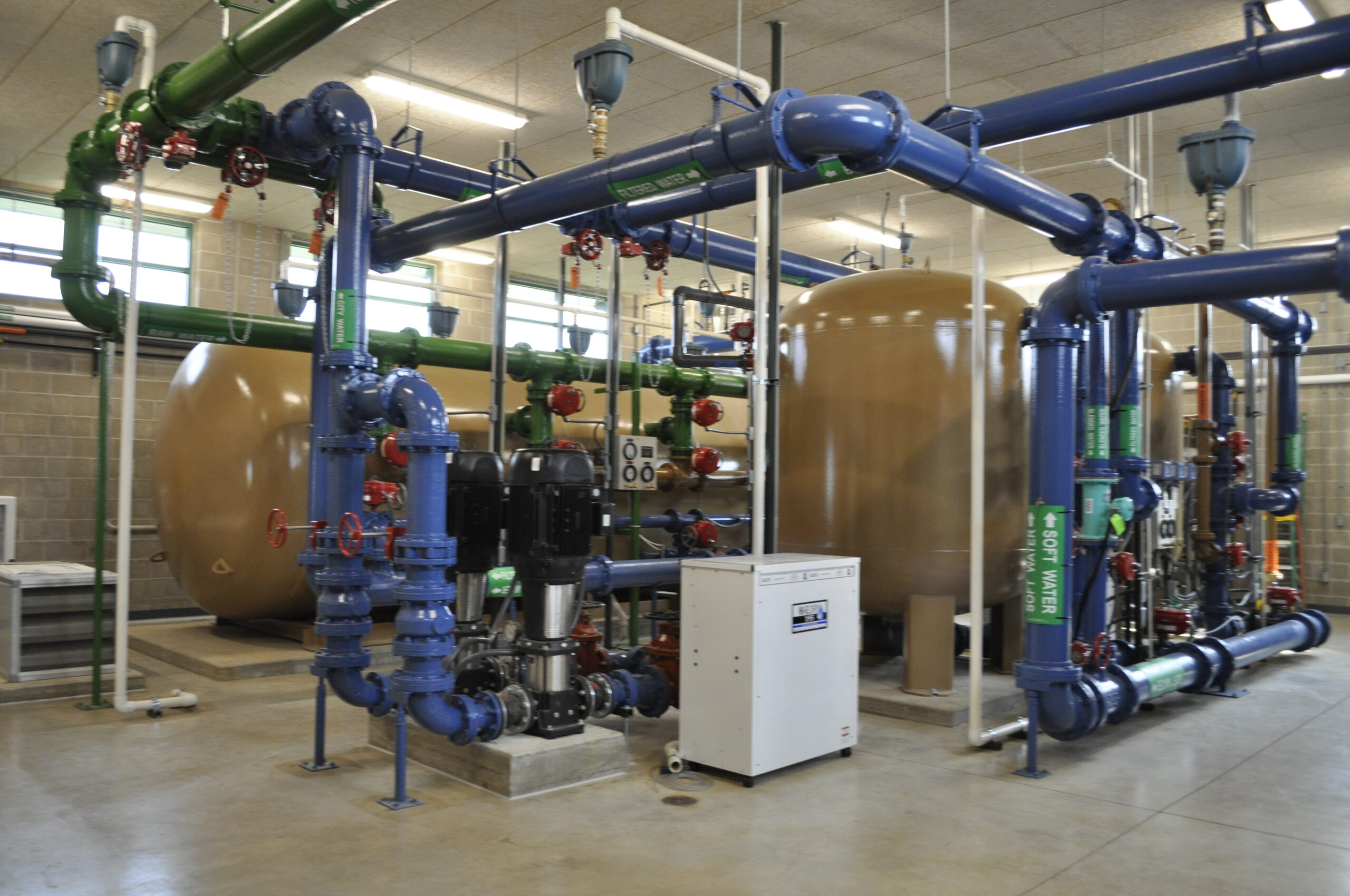
The City of Lexington’s existing water treatment plant (WTP) was located in downtown and was originally constructed in 1946 with major upgrades in 1978 and 2001. The existing WTP was aging and deteriorated to the point that some of the treatment equipment was obsolete and spare parts were no longer available.
Farnsworth Group was retained by the City to prepare a comprehensive planning study to evaluate alternatives for the rehabilitation or replacement of the WTP. Based on the study results, the City authorized Farnsworth Group to design, permit, and administer construction of a new 500 gpm filtration and ion exchange softening plant with a new well.
Due to high levels of color from organic tannins in the raw water, pilot testing was also performed as part of the design to identify the specific anion exchange resin to reduce these color causing organics in the finished water.
Reducing these organics in the finished water help to improve the taste and odor, and reduces the amount of chlorine disinfectant required to maintain adequate chlorine residuals in the water system. This reduction in organics and chlorine usage also reduces the formation of chlorine disinfectant by-products, which are regulated by the Illinois EPA. The project was funded through an IEPA State Revolving Loan.
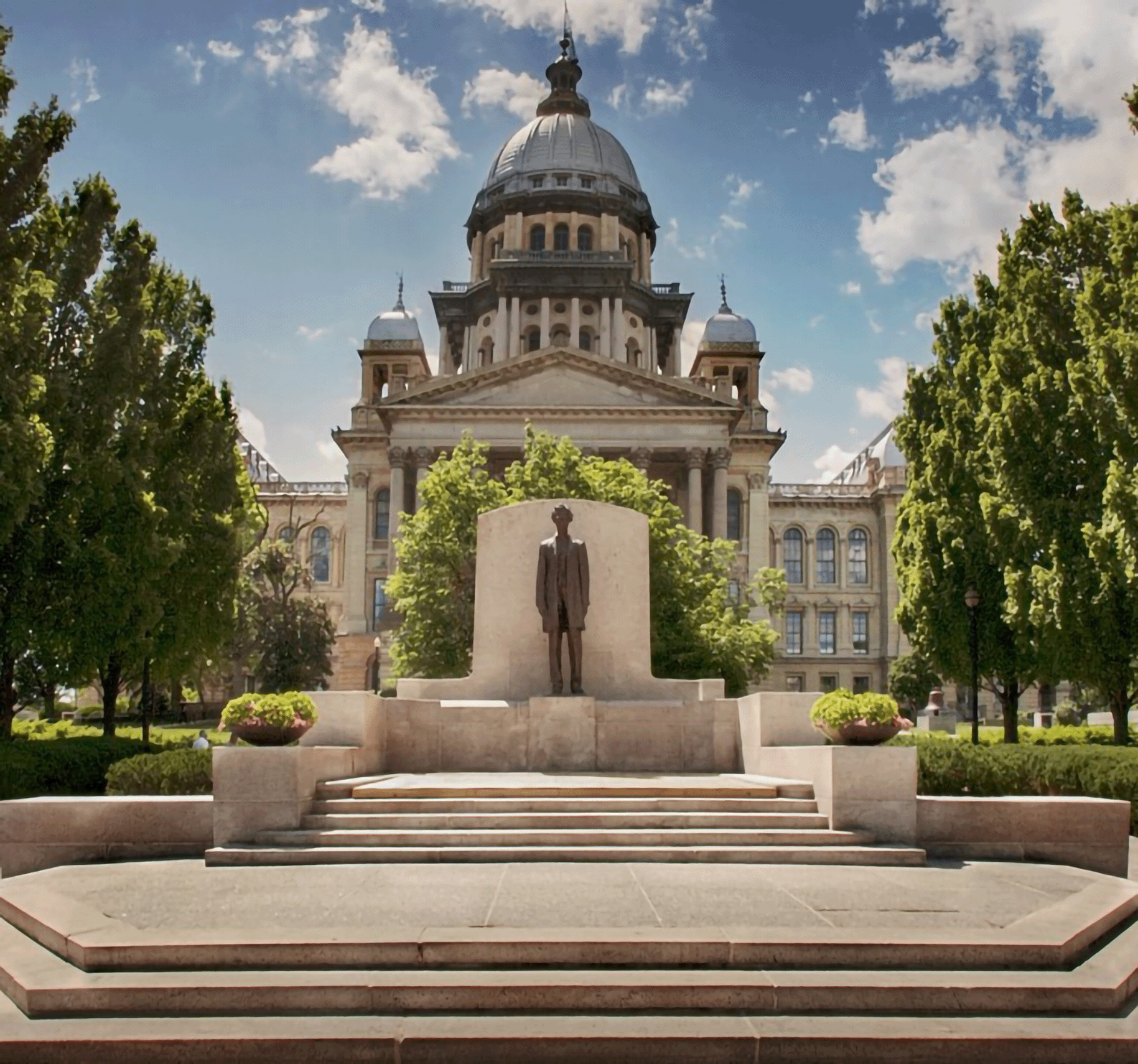
The Illinois State Capitol’s North Wing required a comprehensive modernization that would preserve the integrity of a historic landmark while improving building performance, accessibility, life safety, and sustainability.
Farnsworth Group is providing LEED-enhanced commissioning services for the addition and renovation of the Illinois State Capitol. Services include design-phase reviews, construction inspections, startup verification, functional performance testing, operations and maintenance training, and warranty-phase support. The project encompasses a complete renovation of the North Wing, including mechanical, electrical, plumbing, fire protection, accessibility, and envelope improvements, as well as a new below-grade entrance structure, conference center, and connecting tunnel system.
Enhanced commissioning helps ensure that building systems operate as intended, reducing operational risk, improving energy performance, supporting occupant comfort, and helping the State achieve its sustainability goals while protecting a historic asset.
The project is pursuing LEED Silver certification and includes comprehensive commissioning oversight from design through occupancy to verify the performance of critical building systems within the renovated Capitol complex.
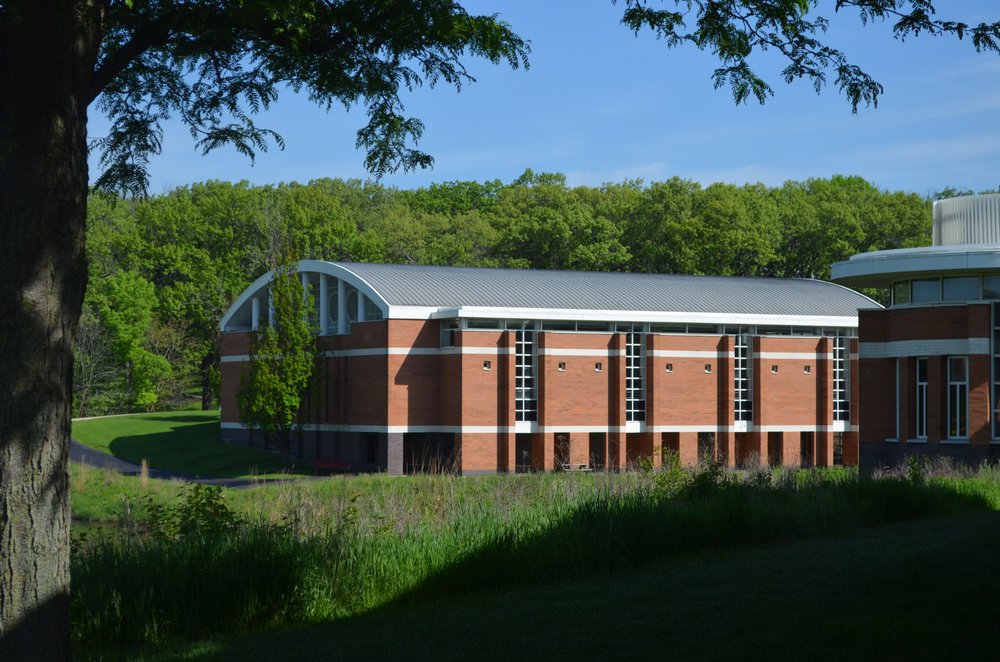
The Village of Orland Park is taking a step towards the future with two exciting projects: the Franklin Loebe Center (FLC) and the Sportsplex. The FLC has a total area of 13,125 SF, and the Sportsplex has a total area of 89,000 SF. Both buildings had a comprehensive upgrade of their HVAC systems, including replacing existing units and adding new, high-tech equipment.
The FLC project replaced two ventilation units with grade-mounted RTUs and installed two tankless hot water heaters. All pneumatic controls were replaced with DDC, and all air devices were rebalanced. Meanwhile, the Sportsplex project replaced two RTUs, added high-volume low-speed fans to two gyms and common space, replaced variable air volume units, and rebalanced the entire facility.
These upgrades are just the beginning. Commissioning was performed on all HVAC systems and related controls, valves, ducts, pipe insulation, and domestic hot water recirculation. This means every system was meticulously tested to ensure it functions optimally. Traditional testing and balancing work were also included in the commissioning process, which resulted in the commissioning/retro-commissioning of both facilities.
Areas of expertise include but are not limited to, the following:
- Development of a commissioning plan
- Hot water systems
- AHUs
- Packaged AC or HP units
- Terminal units and re-heats
- Unit heaters
- Domestic hot water system
- Building automation system
- Testing and balancing verification of all air/fluid systems